
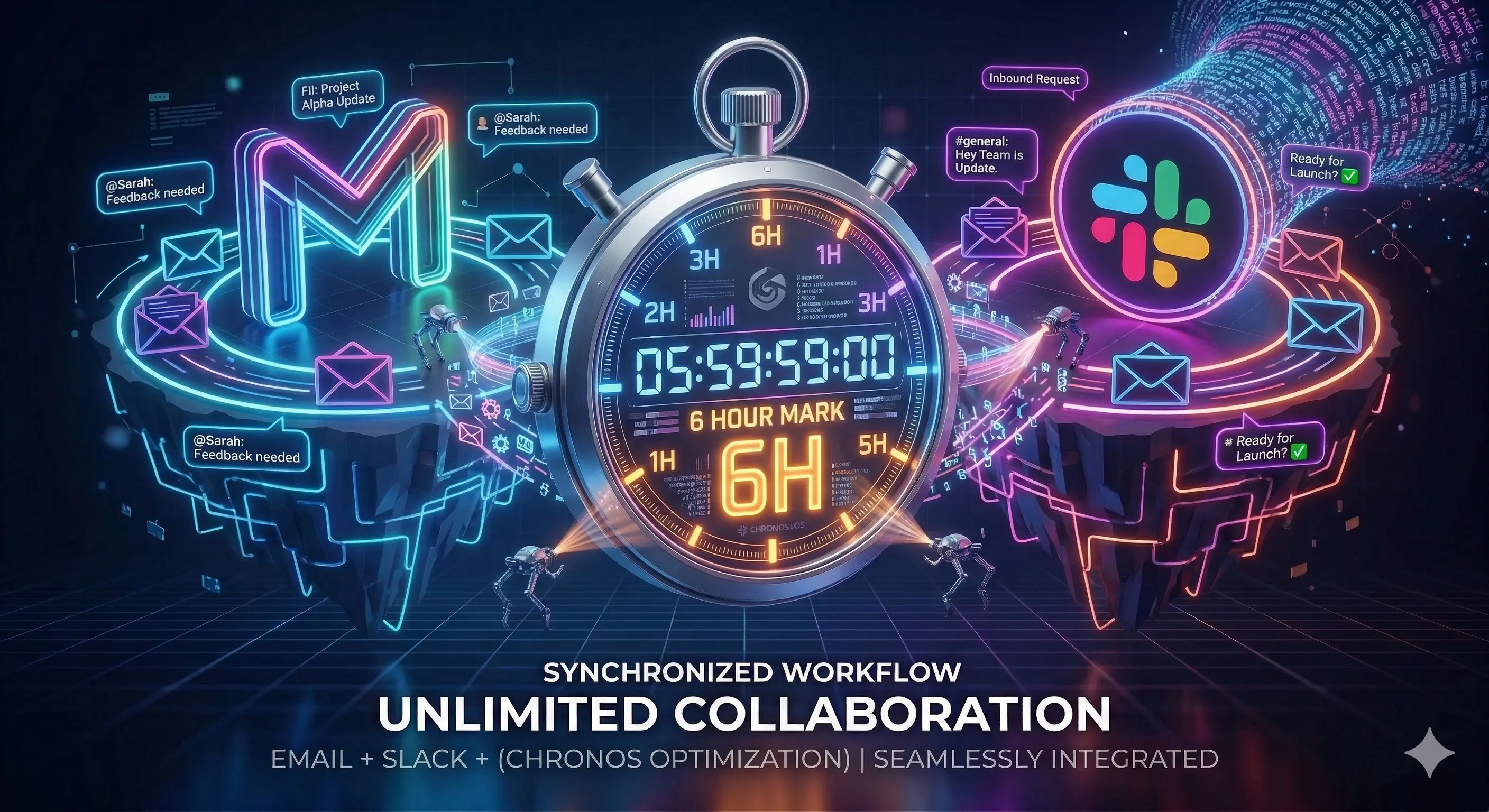
41% of customers expect a response within six hours of sending a support email.
Only 33% of companies actually meet that bar.
That gap — eight percentage points — represents a large number of customers who reached out, waited, and heard nothing within the window they considered reasonable. Some followed up. Many did not. Some of the ones who did not simply moved on.
Why the first response is the one that matters most
Customers are not necessarily expecting their issue to be resolved in six hours. They are expecting to know that someone saw their email and is working on it.
The first response resets the clock. It converts an open question — “did anyone read this?” — into a known state: “someone is on it.” From there, customers are generally patient. They understand that fixes take time, that investigations require context, that refunds have to go through a process.
What they do not understand, and what they interpret as a bad signal, is silence.
The silent churn problem
Most customers who do not get a timely response do not send a follow-up complaint. They do not post a negative review. They quietly cancel, or quietly stop renewing, or quietly start evaluating alternatives.
You do not see this in your support metrics. You see it months later in retention numbers, and by then the connection to the missed email is invisible.
“For every customer who reports a bug, there are ten others who do not, and just stop using your app.” The same ratio applies here. For every customer who follows up on an unanswered email with a complaint, there are ten who simply leave.
What slow responses actually signal
From a customer’s perspective, a slow response communicates one of two things: either the company is disorganised, or the customer’s issue is not important enough to prioritise.
Neither interpretation is good for retention. Both affect whether the customer recommends the product to someone else.
Word of mouth from customers who feel ignored is not neutral. It is negative. And in early-stage companies where every referral matters, that is a meaningful cost.
Why small teams are especially vulnerable
A larger company can absorb slow response times with volume. If 5% of emails go unanswered for 24 hours, that is bad but survivable.
For a startup with 200 customers, 5% is ten people. Ten people who reached out and heard nothing. At that scale, every missed email has a name attached to it.
Small teams also tend to have a higher proportion of high-value early customers, the ones whose feedback shapes the product, whose referrals bring in the next cohort, and whose churn is most visible. Those are exactly the people who should never wait more than a day for a response.
What actually closes the gap
The difference between a six-hour response and a twenty-four-hour response is almost never effort. It is visibility.
An email that arrives in a shared inbox and sits unnoticed for twelve hours because nobody saw it, or nobody thought it was their responsibility, would have been picked up in twenty minutes if it had landed in a Slack channel the whole team was watching.
AI triage adds another layer. When the AI flags an email as high urgency or high negative sentiment before anyone sees it, the team knows what to prioritise without having to read every message first. The important emails rise to the top. Response times improve not because the team is working harder but because the system is working smarter.
Your customers are waiting. Most of them are patient. But the clock starts the moment they hit send.